
Do I need an architect when buying property in Malta?
 Dr. Michael LaferlaNotary · Notary, Notarial Council of Malta
With contributions from

In practice yes — and for most buyers it's unavoidable. If you're taking a home loan, your bank requires a valuation report prepared by a warranted architect (perit) before it lends. If anything needs putting right with the Planning Authority, only a perit can file the application — you cannot do it yourself. And your Konvenju customarily makes the purchase conditional on an architect confirming the property is structurally sound and covered by its permits. Underneath all three: the notary checks the title, not the building.
In practice yes — and for most buyers, unavoidably
No statute says in the abstract that a buyer must engage an architect in order to buy a property. That reading is technically true and it is misleading, because three separate mechanisms converge on the same answer, and most buyers meet at least two of them.
If you are taking a home loan, your bank requires one
A Maltese bank will not lend against a property it has not had valued, and that valuation is prepared by a warranted perit — an architect's valuation report, on the bank's own form, assessing the property's market value and, where relevant, the cost of finishing it. If you are financing your purchase, this is not optional and it is not advice: no report, no loan.
If anything needs a Planning Authority application, only a perit can file it
Planning Authority applications are submitted through a perit. Development notifications, full development applications and compliance certificates all require one — a lay applicant cannot file them. This matters more than it first looks: where a property's permits are not in order, the remedy is a PA application, so the moment something needs sanctioning or regularising, a perit is not merely advisable but the only legal route to fixing it.
And your Konvenju will usually require one anyway
On top of both, the protective clauses customarily written into a Konvenju typically make the purchase conditional on an architect confirming that the property has all its necessary permits and is structurally sound. If the condition isn't met, you are not bound to proceed and your deposit is protected.
Underneath all three: the notary checks the title, not the building
The reason is a clean division of professional labour. The notary's job is the searches — confirming the seller genuinely owns the property, hasn't sold it to somebody else, and that no hypothecs or charges are registered against it. That is work on the title. As Dr. Laferla puts it plainly, it isn't the notary who checks a property's permits — that is the buyer's own architect's role.
So if you engage no architect, nobody in your transaction has examined the physical thing you are buying. The title can be immaculate and the building still be unpermitted, unsound, or both.
And it has teeth
Where the architect finds a problem, the consequence is real: the seller is bound to put it right — to sanction or regularise the property, or carry out the works needed so it complies before the final deed.
The compliance check is the floor, not the ceiling
All of the above is about whether the building is legal and sound. An architect is also reading things no clause obliges them to report. Perit Matthew Mercieca's account of what he sees in a property — age, condition, and the gap to finish — is a judgement about what the place will cost you and whether it suits the way you live. The compliance check protects the purchase; that read protects the decision.
Sources
- Dr. Michael Laferla — Yitaku Asks video (the notary handles title and searches; permits are the buyer's architect's role; the architect clause in the promise of sale; the seller's obligation to remedy)
- Perit Matthew James Mercieca — Yitaku Asks video (Architect Series, Cluster 1) (age, condition and the gap to finish)
- Maltese lender practice — the architect's valuation report as a home-loan requirement; the major local banks publish the perit's report form
- Planning Authority — applications filed through a perit: development notifications, development applications and compliance certificates
- Notarial Profession and Notarial Archives Act, Chapter 55 — the notary's duty to investigate title
- Development Planning Act, Chapter 552 — sanctioning and regularisation via the Planning Authority
- Periti Act, Chapter 390 — regulation of the profession of perit (architect and civil engineer); services reserved to the warrant
Related
When should you engage an architect when buying in Malta?
Dr. Michael Laferla · Notary
Building & DesignFAQWhat does an architect do when you buy a property in Malta?
Perit Matthew James Mercieca · Architect & Civil Engineer
Building & Design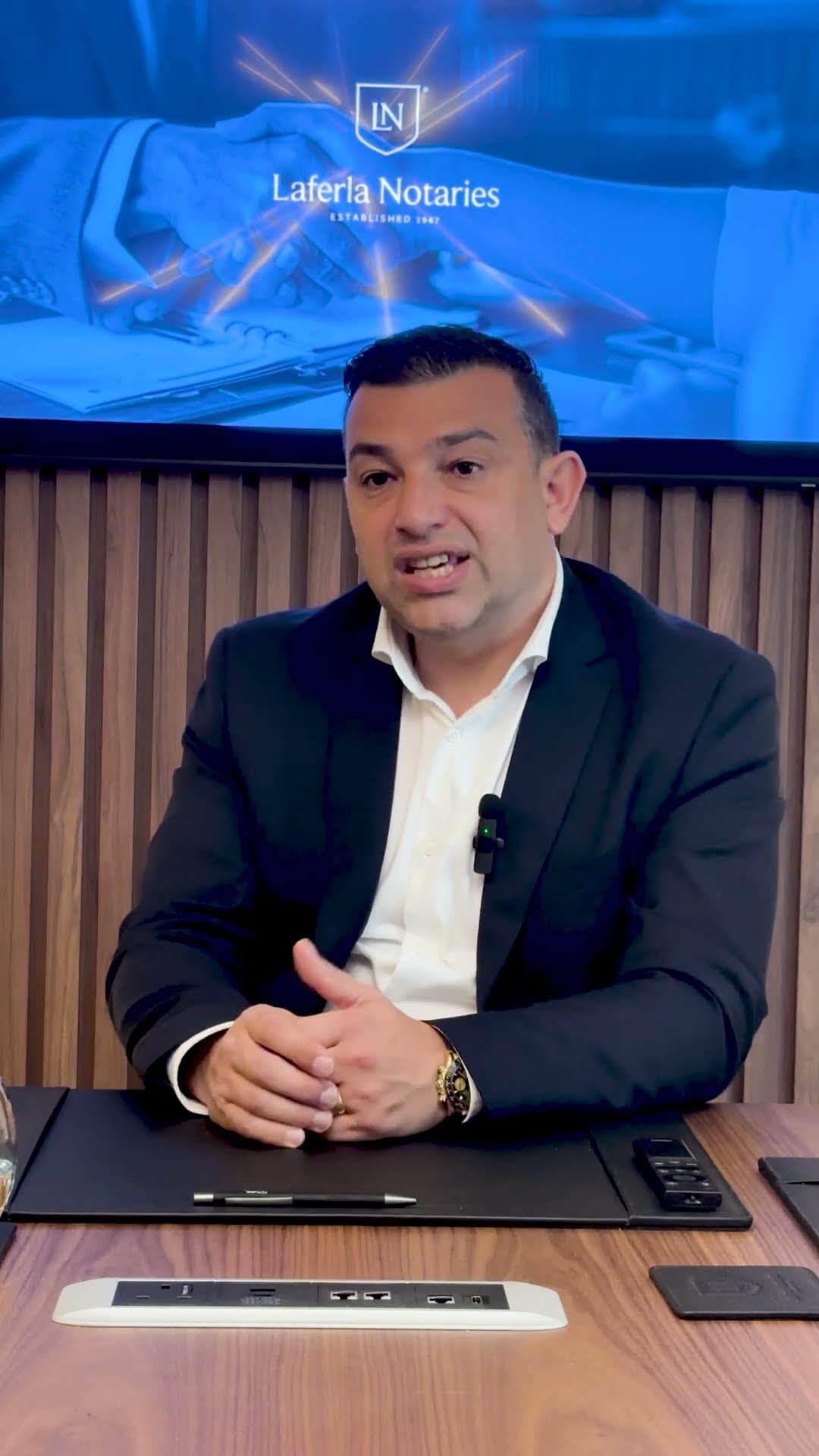 Yitaku Asks
Who checks a property's permits when you buy in Malta?
Dr. Michael Laferla · Notary
Procedures Glossary
Perit
Perit Matthew James Mercieca · Architect & Civil Engineer
Building & Design Yitaku Asks
What clauses should be in your Konvenju in Malta?
Dr. Michael Laferla · Notary
Buying